|
Our journal welcomes not only original high-quality papers covering the theoretical, experimental and operational aspects of electrical and electronics engineering in mobile radio, motor vehicles and land transportation, but also industry-focused publication focusing on research findings and suggesting ideas that may be useful to those conducting similar research.
Below, we highlight two featured peer-reviewed articles:
Non-terrestrial networks (NTNs) are vital for the future of 6G and beyond, offering cost-effective and efficient solutions for ensuring connectivity, especially in areas where terrestrial infrastructure is disrupted by disasters. Their extensive coverage, provided by satellites in HEO, GEO, MEO, and LEO orbits, makes NTNs crucial for maintaining reliable communication in challenging scenarios. An invited paper, coauthored by Mohammed Almekhlafi, Antoine Lesage-Landry, and Gunes Karabulut Kurt from Polytechnique Montréal, investigates access inequality in NTNs, focusing on LEO satellite constellations in remote regions like Ivujivik, Northern Québec. Through a comparative analysis with New York City, the study highlights disparities in satellite coverage and proposes solutions like inter-constellation roaming and relay-based TN expansion. It also identifies key research gaps and emphasizes the need for self-sustaining, low-maintenance TN systems for remote areas.
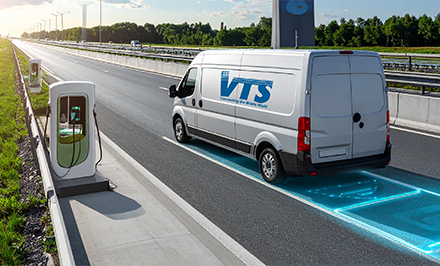
The second paper, coauthored by researchers and industry practitioners from Nottingham Trent University, Wuhan University, Zarqa University, Harbin Engineering University, and JMVL Ltd., proposed a novel Hybrid Electric-Vehicle Charging Management and Security (H-EVCMS) framework that enables balancing charging loads and secure optimization across multiple charging stations through the implementation of the OCPP 1.6 communication protocol.
We’ve provided short summaries of these feature articles, written in accessible language that we hope will make your reading experience enjoyable.
Access Inequality in LEO Satellite Networks: A Case Study of High-Latitude Coverage in Northern Québec
Mohammed Almekhlafi, Antoine Lesage-Landry, and Gunes Karabulut Kurt
Full article: IEEE Open Journal of Vehicular Technology, Volume 6
Summary by Gunes Karabulut Kurt: Low Earth Orbit (LEO) satellite networks are crucial for providing internet access to remote and northern communities and can hence contribute to reducing the digital divide. However, high-latitude regions still face slower and less reliable broadband compared to urban centers. This study compares coverage by major LEO constellations—Starlink, Telesat-like, Kuiper-like, and OneWeb—in Québec and New York, revealing fewer visible satellites and weaker signal quality in the North. To address this, this paper presents a roaming mechanism across constellations, relying on the collaboration between operators to combine the strengths of polar and mid-latitude regions. The numerical results clearly show that coordinated efforts are necessary and will be crucial in addressing roaming, resource management, and control challenges. These strategies can also enhance the resilience and inclusivity of satellite networks.
EV Charging Management and Security for Multi-Charging Stations Environment
Safa Hamdare, David J. Brown, Yue Cao, Mohammad Aljaidi, Omprakash Kaiwartya, Rahul Yadav, Pratik Vyas, and Manish Jugran
Full article: IEEE Open Journal of Vehicular Technology, Volume 6
Summary by Safa Hamdare: This paper introduces a smarter and more flexible way to manage electric vehicle (EV) charging across multiple charging stations. As more EVs hit the roads, it becomes crucial to not only charge them faster but also manage energy use and security more efficiently. The proposed system, called H-EVCMS, uses a hybrid model that combines the strengths of both centralized and distributed management. It smartly decides which station should handle a charge request by checking real-time availability and calculating the "load" on each station. This helps distribute charging demand fairly and avoids overloading any one station.
What makes it even more effective is a price-based strategy that encourages EVs to charge during off-peak hours by lowering the cost at those times. This shifts the load away from busy hours, saving energy and money. Additionally, the system enhances security by protecting communications between the charge points and the central server using the Open Charge Point Protocol (OCPP). Through smart scheduling, pricing, and built-in cybersecurity, this hybrid system ensures that EVs get charged in a way that is efficient, balanced, and secure.
Current Research Trends and Open Challenges for 6G-Enabled Vehicle-to-Everything Networks
The commercial deployment of 5G communications has built a foundation for Vehicle-to-Everything (V2X) networks. The variety of communication links, e.g., Vehicle-to-Vehicle (V2V), Vehicle-to-Infrastructure (V2I), and Vehicle-to-Pedestrians (V2P), among others, potentially facilitate a significant improvement in efficiency and automation level for V2X. Based on 5G, 6G proposes a series of disruptive technologies and is ambitious to provide much enhanced communications performance. Focusing on the scenario of V2X, 6G will support intelligent and endogenous secure connections for vehicles, full integration of communication and sensing/positioning, AI and big data-aided network slicing, and air-space-ground integrated architecture, among others. Overall, the new technologies and refined key performance indicators (KPIs) of 6G are expected to pave the way for V2X applications and services.
We are very happy to have a few leading researchers in this research area, namely José Rodríguez-Piñeiro (Tongji University), Zhongxiang Wei (Tongji University), Jingjing Wang (Beihang University), Carlos A. Gutiérrez (Universidad Autónoma de San Luis Potosí), and Luis M. Correia (University of Lisbon), to publish a special issue in our journal, IEEE Open Journal of Vehicular Technology, that aims to bring together several of the most relevant technological enablers for 6G’s V2X, and encourages further research in this field.
This special issue features five articles on the relevant technological enables for 6G’s V2X:
- Cooperative Multi-UAV Networks: A multi-UAV framework for collaboratively performing energy detection for a set of ground targets is proposed. Read more: https://ieeexplore.ieee.org/document/11103739
- Aerial Edge Computing-Enabled V2X: Uses Aerial Vehicles as edge computing nodes, enabling road vehicles to offload their data in a non-orthogonal multiple access manner. Read more: https://ieeexplore.ieee.org/document/11119075
- Federated Learning-Enabled V2X: Introduces a novel heterogeneous federated learning framework designed to tackle data heterogeneity and semantic inconsistency in V2X environments. Read more: https://ieeexplore.ieee.org/document/11103507
- Integrated Sensing and Communications (ISAC) for V2X Applications: An ISAC-based vehicle localization system combining millimeter-wave radar with RFID strategies is proposed, eliminating the need for additional tag readers. Read more: https://ieeexplore.ieee.org/document/11113304
- 6G-Enabled V2X Networks: Review on the current status and future trends of the main technological enablers of 6G V2X, including V2X standardization, Non-Terrestrial Networks, Ultra Reliable Low Latency Communications, AI, ISAC and propagation channel modeling. Read more: https://ieeexplore.ieee.org/document/11126933
About the IEEE Open Journal of Vehicular Technology (OJVT)
The IEEE OJVT covers the theoretical, experimental and operational aspects of electrical and electronics engineering in mobile radio, motor vehicles and land transportation. A brief summary of these fields of interest are as follows:
- Mobile radio shall include all terrestrial mobile services
- Motor vehicles shall include the components and systems and motive power for propulsion and auxiliary functions
- Land transportation shall include the components and systems used in both automated and non-automated facets of ground transport technology

|